
The Oldest Hakata-ori Textile Weaver, Nishimura Orimono: Factory Tour (1hr)
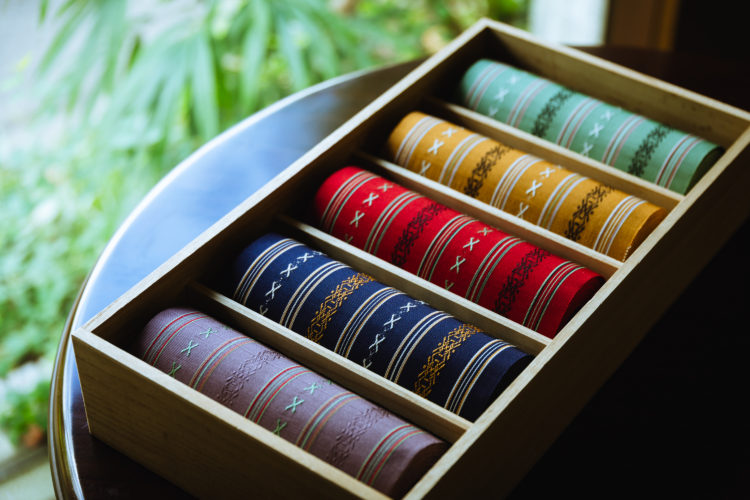
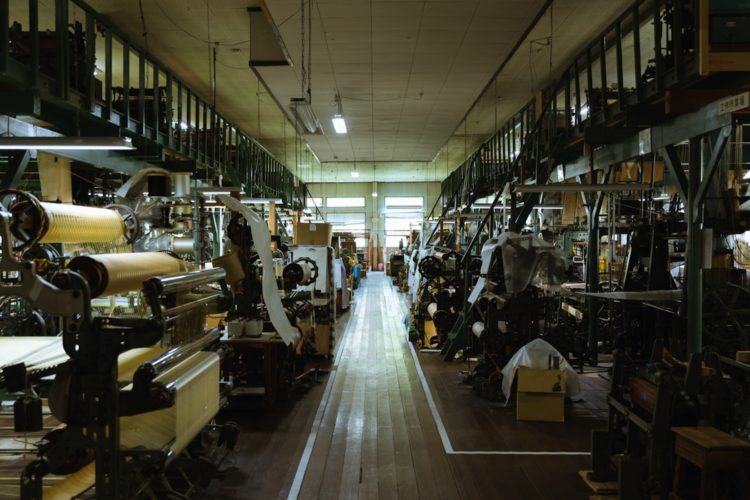
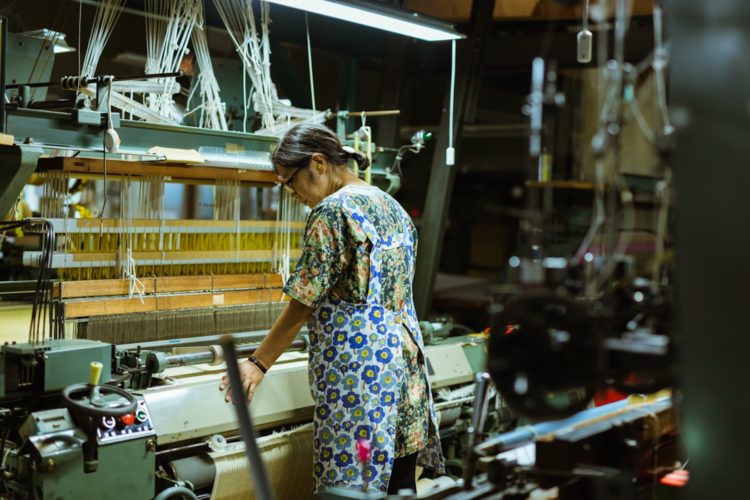
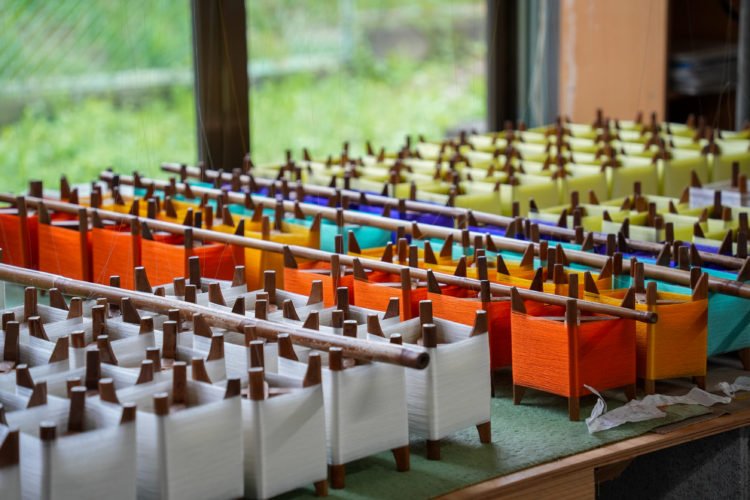

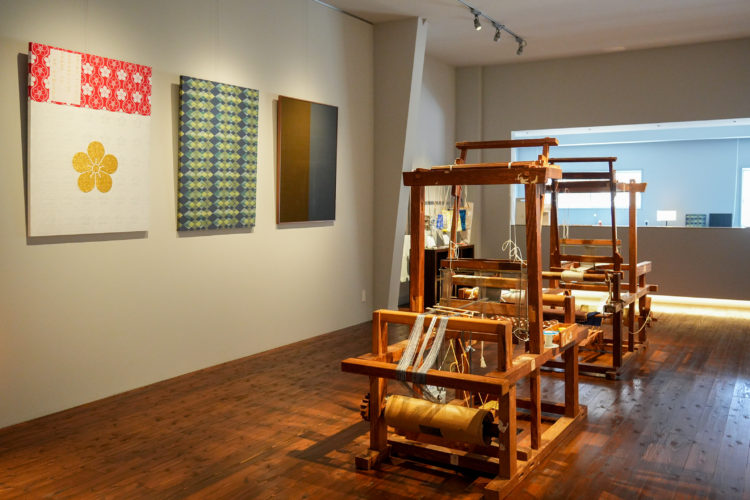
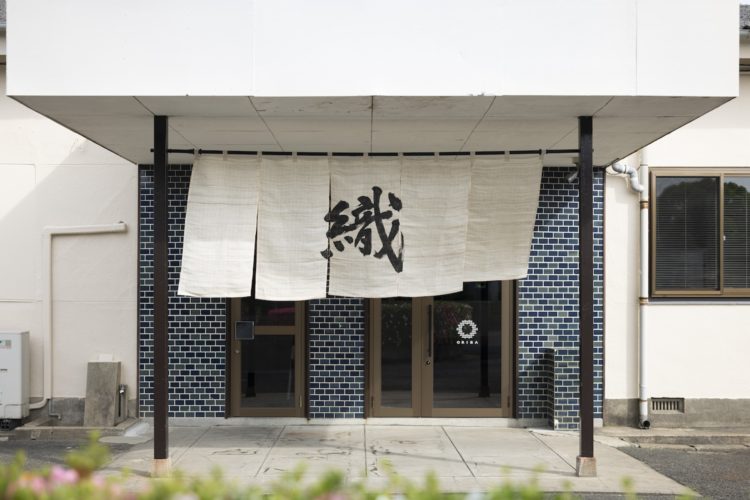
During the Edo period, only 12 manufacturers were permitted to produce Hakata-ori silk textiles. While none of the original manufacturers operate today, Nishimura Orimono studied under the Shirouzu Family, a leader of Hakata-ori weaving and one of the original twelve workshops. Since this time, Nishimura Orimono has carried the techniques and history of the past into the present as the oldest weaver of Hakata-ori textiles.
Nishimura Orimono sources the finest quality silk threads and can produce Hakata-ori entirely in-house, from design to pattern making, dyeing, loom set up, and weaving. During this program, learn about the history of Hakata-ori and Nishimura Orimono and partake in a rare opportunity to visit the factory which is not usually open to the public. This is an exciting chance to learn about Hakata-ori designs, threads, and weaving directly from the artisans themselves. As an optional add-on, a kimono dressing demonstration is available to learn more about how kimonos are constructed.
- ● Learn about the history of Nishimura Orimono and the process of making Hakata-ori textiles
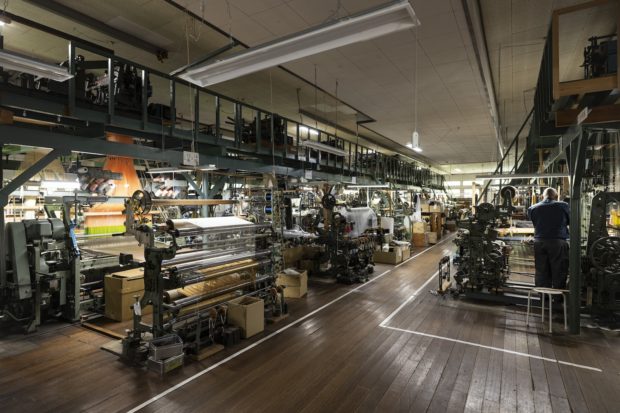
- ● Enter the textile factory which is normally not open to the public and see where the textiles are designed and woven
- ● Take home a small souvenir woven by Nishimura Orimono
- ● Browse the gallery shop, ORIBA, which has obis and other accessories for sale
- ● An optional kimono dressing demonstration is available

- Soichiro NishimuraPresident and Representative Director of Nishimura Orimono, 6th generation
- As the population of kimono wearers declines and demand for obi belts decreases, the company has been innovating new uses for Hakata-ori. Through their “ObitO” series, which includes bags made from Hakata-ori obis and knitted scarves made from leftover yarn, the company hopes to convey the appeal of genuine silk items and pursue new possibilities for Hakata-ori.
Hakata-ori: A Textile for the Shogunate
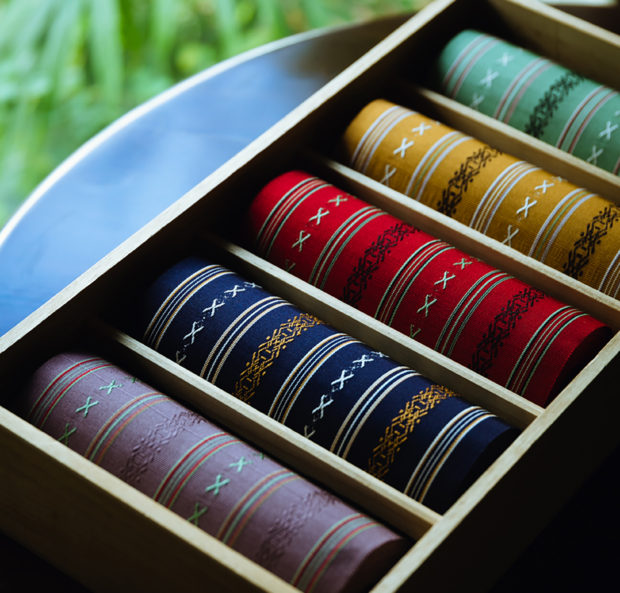
Hakata-ori has a long history that dates back to the Kamakura period (1185-1333) when Hakata merchants ventured out to Song Dynasty China and brought back textile weaving techniques. Adding their own designs to these techniques, the unique style of Hakata-ori was born. During the Edo period (1603-1868), Hakata-ori textiles were presented as valuable offerings to the Tokugawa Shogunate. The quintessential patterns woven into Hakata-ori, called kenjo-gara or “offering patterns”, feature geometric motifs of Buddhist altar objects. During the Edo period, Hakata-ori was typically worn by samurai who praised the fabric’s sturdiness and comfort.
Learn the History and Process of Making Hakata-ori in the Gallery, ORIBA
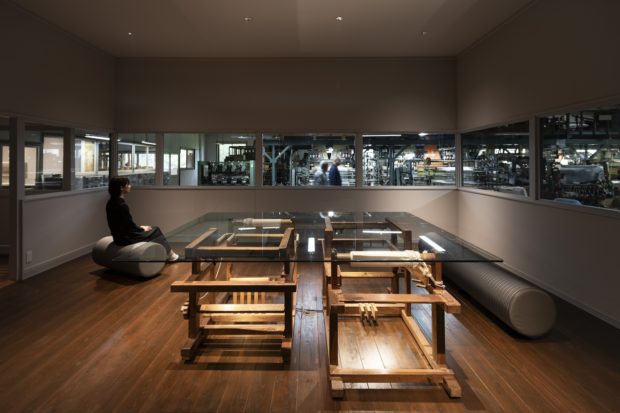
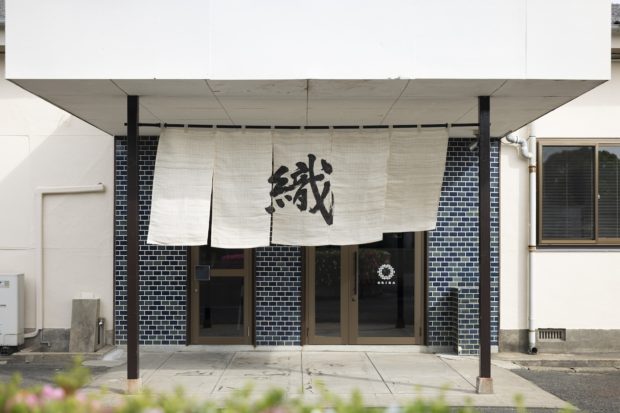
This program starts at ORIBA, a gallery and store located at the entrance of Nishimura Orimono’s main factory. ORIBA was completed and opened in 2024 as a place where visitors can view the factory through glass walls, based on the concept of being “the closest place to the workshop where one can experience the future possibilities of textiles.” This area allows visitors to connect with textiles and feel the potential of Hakata-ori beyond its traditional uses. Listen to an explanation about Hakata-ori and Nishimura Orimono here before entering the workshop.

Tour the Weaving Workshop: A Sanctuary for Craftsmen Closed to the Public
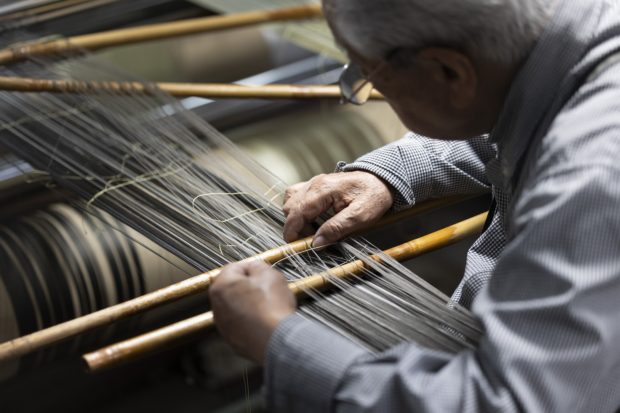
After the lecture, tour the workshop which is not open to the public, and see the design and weaving processes. In the design studio, learn in detail how patterns are made and colors are picked. In the weaving space, see how the world’s highest quality silk yarns from BRATAC are prepared for weaving, and observe the processes of yarn reeling, warping, and setting. Finally, observe the Jacquard looms in action weaving Hakata-ori.
The Oldest Weaver of Hakata-ori: Nishimura Orimono
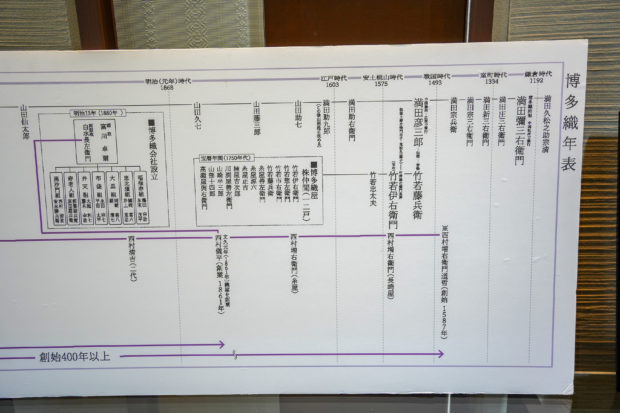
The history of Hakata-ori textiles dates back to 1241 when Yazaemon Mitsuta traveled to the Song Dynasty (modern-day China) and brought back weaving techniques.
In 1587, ancestors of the Nishimura family moved from Nagasaki to Hakata and started a silk yarn import business. Later, in 1861 at the end of the Edo period, Gihei Nishimura transitioned the business to a Hakata-ori weaving factory and became the founder of Nishimura Orimono. Nishimura Orimmono continues to operate in the present day.
During the Edo period, only 12 manufacturers were permitted to produce Hakata-ori. While none of the original manufacturers from that time operate today, Nishimura Orimono studied under the Shirouzu Family, one of the original twelve weavers. From this, Nishimura Orimono has been able to carry the techniques and history of the past into the present as the oldest Hakata-ori weaver.
Kimono Dressing Demonstration: Learn More about Kimonos (30 min)
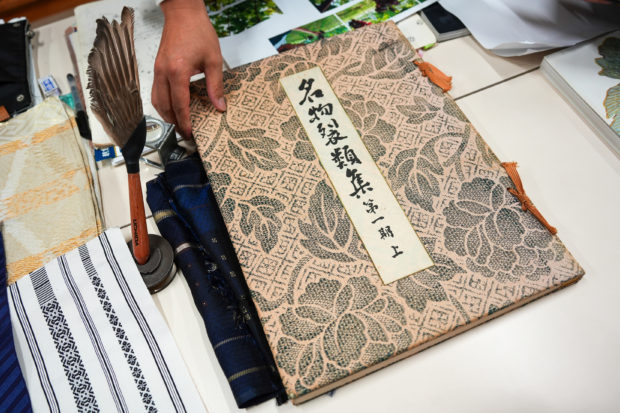
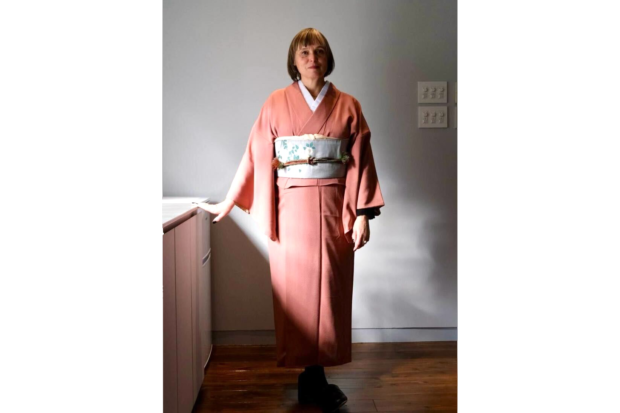
A special demonstration is available where one person per group will be dressed in a kimono and Hakata-ori obi sash made by Nishimura Orimono. (15,000 yen per group, tax included). No special preparation is required as the kimono is worn over clothes. Learn about the different parts of a kimono and how an obi is worn. After dressing, you can take your own pictures before returning the kimono. (This is not a kimono rental service).

| Tour Code | GFCS01 |
|---|---|
| Dates | ※Tours are scheduled by request. Please submit your preferred dates at least 7 days in advance. We will check availability with Nishimura Orimono and get back to you. |
| Duration | 1 hour (Optional add-on kimono dressing + 30 min) |
| Schedule |
|
| Meeting Place |
 |
| Language | Japanese ※ An English interpreter can be arranged for an additional fee. Please contact us for details. (tour@unalabs.jp) |
| Participants | Minimum 2 / Maximum 6 (Please contact us for groups of 7 or more) |
| Reservation Deadline | Up to 7 days prior to experience
|
| Payment Method | Advance payment by credit card (VISA, Master, Amex, JCB) using a form once the request has been confirmed. |
| Attire | Please wear clothes and shoes that are comfortable to walk in. You will need to remove your shoes in a few places during the tour. |
| Notes | ● This is an experience program where guests arrange transportation themselves to and from the meeting place. ● UNA Laboratories staff will not accompany guests on this program. ● We are not responsible for any injuries or accidents during the tour. We recommend participants purchase domestic travel insurance for the tour. ● The tour will be held even in the event of rain, barring cases of inclement weather such as heavy rain or a typhoon. ● All of the photographs displayed on this website are for illustrative purposes only. |
| Cancellation Policy | 3 to 1 day(s) preceding the tour start date: 50% of the tour fee Before departure on the day of the tour: 100% of the tour fee No-show without prior notification or cancellation after the start of tour: 100% of the tour fee |
Travel Planning: Implementation
- UNA Laboratories Inc. (Fukuoka Prefectural Governor Registration #2-951)
- 3-12-22-302 Yakuin, Chuo-ku, Fukuoka-shi, Fukuoka Prefecture 810-0022
- TEL: 092-982-7956E-MAIL: tour@unalabs.jp
- Domestic Certified Travel Supervisors:
Aya Tamura, Noriko Yahata, Rei Watanabe - Business Hours:
9:00 a.m. to 5:00 p.m. Monday through Friday (Closed Saturdays, Sundays, and Holidays) - *Requests received outside of business hours will be processed the following business day.
- *Domestic Certified Travel Supervisors are responsible for transactions held at the sales office that processes customers’ travel. Please do not hesitate to contact the aforementioned Domestic Certified Travel Supervisors with any questions or concerns regarding the travel contract.
Tour Information
- Dates
- Dates: 10:30〜、14:30〜(Closed on Sundays, national holidays and 2nd and 4th Saturdays)
※Tours held by request.
- Duration
- ~1 hour
- Recommended Age
- 13 years and older
- Optional
- Kimono Dressing Demonstration (30 min)
Price: 15,000 yen / 1 group (tax incl.)
※Find details in the information on the left.
- Price
- 10,000yen (tax included)
- Remarks
- * Includes a Hakata-ori souvenir
* Children 12 years and younger cannot join this tour.